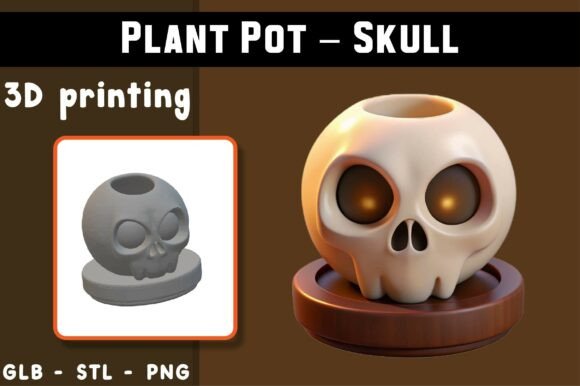
Plant Pot – Skull 3D Model
If you have ever stared at a blank shelf and felt like it lacked character, or if you are looking for a project that bridges the gap between spooky aesthetics and botanical care, the Plant Pot – Skull 3D Model offers a compelling solution. This is not just another generic decorative item; it is a beautifully crafted digital asset designed to bring a specific kind of magical moment into your physical space. Whether you are a seasoned 3D printing enthusiast with a drawer full of filament spools or a creative professional looking for unique assets for a digital project, this model provides a versatile foundation for imagination.
The core concept behind this design is deceptively simple yet visually striking: a skull-shaped vessel intended to house living plants. It captures the excitement of a new creature emerging into the world, blending the macabre with the organic. The expressive details in the geometry allow for gentle, story-rich charm, making it perfect for collectors, fantasy lovers, and anyone who enjoys imaginative creations that spark conversation. By downloading this file, you are not just getting a shape; you are acquiring a tool for self-expression and environmental storytelling.
Why Choose a Digital-First Approach?
In an era where customization is king, relying on mass-produced decor often feels limiting. The Plant Pot – Skull 3D Model empowers you to create exactly what you envision. Included in the download package are multiple file formats tailored to different workflows:
- STL Format: This is the industry standard for 3D printing. The geometry is clean and optimized for easy slicing, meaning you spend less time troubleshooting errors in your slicer software and more time watching your printer work.
- GLB Format: Ideal for previews, augmented reality (AR) applications, or digital showcasing. If you are a marketer or designer, this allows you to visualize how the pot might look in a virtual room setup without committing to physical production.
- PNG Reference Image: A high-quality rendered image that serves as a visual guide. While not printable, it helps you understand the final aesthetic and lighting interactions before you start printing.
This multi-format approach ensures that whether your goal is to hold a small succulent on your desk or to use the model in a game engine, you have the right tool for the job. The GLB file, in particular, is valuable for educators or content creators who need to demonstrate the object’s form in presentations or online tutorials without shipping physical prototypes.
Real-World Use Cases Beyond the Shelf
While the most obvious application is as a planter, the utility of the Plant Pot – Skull 3D Model extends across various personal and professional scenarios. Understanding these contexts can help you decide if this asset fits your current needs.
Home Decor and Lifestyle Enhancement
For hobbyists and interior design enthusiasts, this model serves as a focal point. Imagine placing a small, resilient plant like a pothos or a succulent inside the skull. The contrast between the vibrant green leaves and the stark, stylized bone structure creates a dynamic visual tension. It is particularly effective in modern lofts, gothic-inspired rooms, or even minimalist spaces where a single statement piece is preferred over clutter. Because the design is beginner-friendly, you can experiment with different colors—perhaps a matte black for a sleek look or a translucent resin for a ghostly effect—to match your existing decor themes.
Gaming and Tabletop Enthusiasts
If you are part of the tabletop RPG community, this model doubles as a thematic prop. During a fantasy campaign, a skull planter could represent a necromancer’s study or a cursed garden. The GLB format allows you to import the model directly into 3D printing slicing software or even into AR apps to preview how it looks on your gaming table. The detailed geometry ensures that close-up shots during live streams or video calls capture the intricate textures, adding depth to your visual setup.
Educational and Creative Projects
Educators and makerspaces can utilize this model to teach principles of biology mixed with art. It serves as a tangible example of how organic forms can be reinterpreted through industrial design. Students can print the pot, discuss the structural integrity required to hold soil and water, and then engage in a creative exercise by painting or modifying the surface. For freelancers and bloggers, this model provides fresh content angles. You could write a guide on "How to Style Unique Planters" or create a video series on 3D printing techniques using this specific STL file, driving engagement through practical, hands-on demonstrations.
Practical Considerations for Printing and Usage
Before you hit "print," it is crucial to manage expectations and prepare your workspace. The disclaimer accompanying the Plant Pot – Skull 3D Model highlights important technical realities that every user should respect.
First, while the geometry is designed for smooth, reliable print results, no two printers behave identically. Your specific hardware, the brand of filament or resin you choose, and your slicer settings will all influence the final outcome. Supports may be required depending on the orientation you choose. For instance, printing the skull upright might require internal supports to prevent sagging in the eye sockets or nasal cavity, whereas printing it sideways might reduce support material but require post-processing to remove those marks. Always preview the STL file in your slicer software to identify potential overhangs and adjust settings accordingly.
Secondly, consider the biological needs of your plant. Since this is a DIY project, you must ensure the pot is watertight. Depending on the material used, you may need to apply a sealant or insert a separate plastic liner to prevent water from damaging your printer bed or seeping into porous materials like certain types of PLA. This adds a layer of responsibility to the creative process, turning a simple print into a functional craft project.
Digital vs. Physical: Choosing Your Path
One of the distinct advantages of this asset is the flexibility it offers between digital and physical applications. If you are a publisher or marketer, you might find more value in the GLB and PNG files. These can be used in e-commerce listings, social media campaigns, or digital catalogs without the overhead of manufacturing and shipping. You can showcase the product’s potential in various lighting conditions or paired with different digital backgrounds, offering customers a realistic preview of how the Plant Pot – Skull 3D Model could enhance their environment.
Conversely, if you are a collector or a maker, the tactile satisfaction of holding a printed version is unmatched. The ability to customize the scale, color, and texture gives you ownership over the final piece. It transforms a digital file into a personal artifact. However, remember that print results may vary. What looks perfect on your screen might require sanding, priming, or repainting to achieve the desired finish. Embracing this variability is part of the joy of 3D printing—it allows for iteration and improvement.
Final Thoughts on Integration
The Plant Pot – Skull 3D Model is more than a novelty item; it is a bridge between digital creativity and physical presence. It appeals to a wide demographic because it touches on universal interests: nature, design, technology, and the slightly mysterious allure of the skull motif. Whether you are using it to decorate your home office, as a prop for your next D&D session, or as a subject for your next blog post, the key to success lies in preparation and realistic expectations.
Take the time to understand the file formats provided. Use the GLB for visualization to save yourself from printing mistakes. Use the STL for its clean geometry to ensure a successful print. And always remember that this is an AI-assisted 3D design meant to inspire your own creativity. By approaching the project with a practical mindset and an open eye for detail, you can turn this digital asset into a meaningful addition to your collection or workflow. Add a touch of wonder and magic to your space, and let your imagination dictate how this skull comes to life.