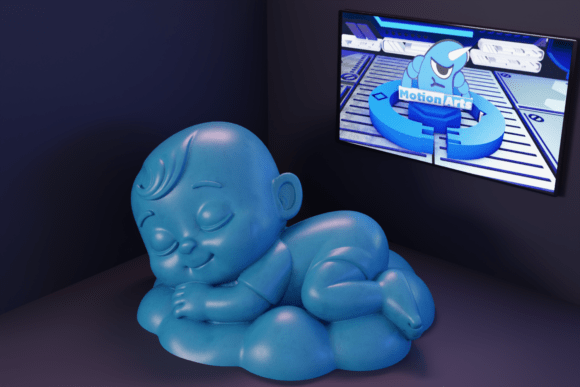
Sleeping Baby in 3D: A Practical Review of a Delicate STL Asset
In the rapidly evolving landscape of digital fabrication and 3D printing, the market is saturated with complex mechanical parts, intricate architectural models, and high-fidelity character busts. However, there remains a distinct niche for assets that prioritize emotional resonance, simplicity, and aesthetic purity over technical complexity. One such asset gaining traction among creators and hobbyists is the Sleeping Baby in 3D STL model. This article provides an objective evaluation of this specific digital file, analyzing its design philosophy, technical usability, and practical applications for professionals and serious enthusiasts alike.
Design Philosophy and Aesthetic Appeal
The core strength of the Sleeping Baby in 3D model lies in its deliberate departure from hyper-realism. Instead of attempting to replicate anatomical precision, which often requires extensive post-processing and advanced printing techniques, this model embraces a cartoon style characterized by smooth, harmonious lines and rounded features. From a design perspective, this approach offers several advantages for both the printer and the end-user.
The serene posture and simplified geometry reduce the likelihood of print failures associated with sharp angles or thin, unsupported overhangs. For FDM (Fused Deposition Modeling) printers, which are common in small businesses and home offices, this translates to higher success rates and less time spent on support structure removal. The model’s tranquility is not just visual; it is structural. The lack of intricate details means that surface texture plays a crucial role in the final presentation, allowing the creator to focus on material choice and color application rather than fixing minor geometric errors.
This aesthetic aligns well with current trends in interior decor and gift-giving, where "soft" aesthetics and minimalism are preferred. The model serves as a blank canvas for creativity, inviting users to personalize elements such as blankets, clothing, or facial expressions through painting or decoupage. This flexibility makes it particularly valuable for entrepreneurs looking to create unique, hand-finished products for children’s rooms, nurseries, or therapeutic environments.
Technical Usability and Print Optimization
Evaluating any STL file requires a close look at its technical preparation. The Sleeping Baby in 3D file is optimized for both FDM and resin (SLA/DLP/LCD) printing, a dual compatibility that significantly broadens its potential user base. Understanding the nuances of how this model performs across different technologies is essential for achieving the best results.
- FDM Printing: For filament-based printers, the model’s rounded contours are forgiving. It typically prints well without excessive supports, especially if oriented correctly. The smooth surfaces allow for easy sanding and priming, making it ideal for beginners who want professional-looking results without advanced skills. However, layer lines may be visible depending on the nozzle size and print resolution, which can be mitigated by using matte finishes or textured paints.
- Resin Printing: Users with resin printers will appreciate the model’s ability to capture finer details if they choose to add custom accessories or paint delicate features like eyelashes or fabric folds. Resin allows for higher fidelity, bringing out the "sweetness" of the cartoon style more vividly. Care must be taken during washing and curing to preserve the delicate nature of the pose, but the overall structural integrity remains robust.
The file itself is clean and manifold, meaning it does not contain non-manifold edges or inverted normals that often cause slicing software to fail. This reliability saves time in the pre-production phase, allowing creators to move quickly from digital file to physical object. For agencies or studios producing multiple units for events or souvenirs, this consistency is critical for maintaining workflow efficiency.
Practical Applications and Market Fit
Who benefits most from acquiring the Sleeping Baby in 3D asset? The answer depends on the specific goals of the user, but several key demographics stand out.
Small Business Owners and Crafters
For Etsy sellers, craft fair vendors, or boutique owners, this model offers a low-risk entry into the nursery decor market. The cost of materials for a single unit is relatively low, and the perceived value of a hand-painted, unique piece can command a healthy profit margin. Because the design is simple, production times are shorter compared to complex figurines, allowing for higher throughput during peak seasons like baby showers or holidays.
Educators and Therapists
In educational settings or occupational therapy practices, tactile objects are used to teach concepts of care, empathy, or fine motor skills. A sleeping baby model can serve as a prop for storytelling or role-playing exercises. Its soft, non-threatening appearance makes it suitable for young children, reducing anxiety and encouraging interaction. The durability of 3D-printed versions ensures they can withstand repeated handling in classroom environments.
Interior Designers and Decorators
Professionals designing spaces for infants or families may find this model useful as part of a larger diorama or shelf display. Its neutral and peaceful vibe complements various color palettes and themes, from pastel minimalist to rustic woodland. It can be printed in white or natural colors to blend seamlessly into existing decor schemes.
Limitations and Considerations
No asset is without limitations, and transparency is key to informed decision-making. While the Sleeping Baby in 3D model excels in simplicity, this same trait may be a drawback for users seeking high-detail realism. If your project requires lifelike skin textures, realistic hair strands, or complex articulation, this cartoon-style model will not meet those needs. It is strictly a decorative or symbolic piece.
Additionally, the reliance on post-processing for personalization means that the final product’s quality is directly tied to the user’s artistic skill. A poorly painted version may appear cheap, undermining the inherent elegance of the design. Therefore, buyers should assess their own capabilities in painting and finishing before committing to bulk production. For those lacking these skills, collaborating with artists or purchasing pre-painted versions (if available) might be necessary.
Another consideration is the ethical dimension of depicting human figures, particularly infants. While this model is stylized and clearly artistic, some audiences may have sensitivities regarding the commercialization of baby imagery. Creators should ensure their marketing respects cultural norms and avoids overly sentimental or exploitative framing.
Long-Term Value and Conclusion
The long-term value of the Sleeping Baby in 3D STL file lies in its versatility and enduring appeal. Unlike trend-driven designs that may quickly become outdated, the concept of innocence and peace is timeless. As long as there is a demand for nursery decor, gifts, and comforting art pieces, this model will remain relevant.
Furthermore, the open nature of 3D printing allows for continuous iteration. Users can modify the original file to create variations—such as adding a pacifier, changing the blanket pattern, or adjusting the scale—without starting from scratch. This adaptability extends the lifecycle of the asset, providing ongoing utility beyond the initial download.
In conclusion, the Sleeping Baby in 3D model is a well-crafted, technically sound asset that fills a specific gap in the 3D printing ecosystem. It is not a tool for engineering or high-end prototyping, but rather a creative resource for artisans, educators, and decorators. Its strengths lie in its ease of use, aesthetic charm, and adaptability across different printing technologies. For professionals and hobbyists who value simplicity, emotional connection, and practical efficiency, this model represents a solid investment. It invites users to slow down, engage in the mindful process of creation, and produce something that brings a sense of calm and joy to others. Whether you are scaling up production for a small business or simply exploring the joys of 3D printing for the first time, the Sleeping Baby in 3D offers a gentle and rewarding introduction to the medium.